


Modular vs Manufactured Homes Differences

Updated: Jul 13
Modular vs manufactured homes is a key distinction buyers should understand before choosing a factory-built option over traditional site-built construction. These terms, along with prefab and mobile homes, are often used interchangeably, but they refer to distinct housing types with important differences. Knowing them can help you avoid costly mistakes and make a more informed investment.
Built America Magazine breaks down each category clearly so you can choose the option that best fits your lifestyle, budget, and long-term goals.
Modular vs. Manufactured Homes

When choosing between a modular and a manufactured home, the decision often comes down to four key factors: financing, permanence, long-term value, and budget.
Manufactured homes typically cost less upfront and offer flexible configurations, making them a practical option for budget-conscious buyers or those in rural areas. These homes are built on a steel chassis and governed by the federal HUD code rather than local building codes. As a result, financing options may be more limited, often involving FHA Title I or Title II loans, and placement can be restricted by zoning in some areas.
Modular homes, by contrast, are installed on permanent foundations and must comply with local and state building codes. Because they are classified as real property, they are generally eligible for conventional mortgage financing and, in many cases, can appreciate in value similarly to site-built homes.
For buyers seeking the efficiency of off-site construction combined with traditional financing and long-term ownership stability, modular construction often offer a strong balance. However, both options have improved significantly in quality and design, and the right choice ultimately depends on your priorities.
What is a Manufactured Home?
A manufactured home is the modern successor to the mobile home, built entirely in a factory and transported to a site on a permanent steel chassis. These homes must comply with the federal HUD code, which sets standards for construction, safety, energy efficiency, and fire resistance.
Manufactured homes are available in single-wide, double-wide, and triple-wide configurations, ranging from compact layouts to larger multi-bedroom designs.
A defining characteristic is the non-removable steel chassis, which remains part of the structure even after installation. While financing and zoning can present challenges compared to site-built housing, modern manufactured homes are significantly more advanced and reliable than earlier generations.
Why Modular Construction Stand Out
Modular construction are constructed in sections, or modules, in a factory and then assembled on a permanent foundation at the building site. Unlike manufactured homes, they must meet the same building codes as site-built homes.
This distinction is critical. Because modular homes are treated the same as traditional homes by lenders and insurers, buyers typically have access to standard mortgage financing and homeowner’s insurance.

Modular homes also tend to retain value well over time and face fewer zoning restrictions in many areas. From a design perspective, they offer a high degree of flexibility, with a wide range of layouts, finishes, and architectural styles available.
As Tom Hardiman, Executive Director of the Modular Building Institute (MBI), shared in an interview with Built America Magazine, manufactured homes are often designed with affordability as the primary goal, while modular homes are generally engineered to meet broader structural and code requirements.
In many cases, modular homes are built to handle demanding conditions such as high winds, heavy snow, and seismic activity, depending on local building standards.
Whether you are considering a modular or manufactured home, there are compelling advantages shared by all off-site built housing that make them worth serious consideration:
What is a Prefab Home?
A prefab home, or prefabricated home, is any structure built partially or entirely in a factory before being transported to its final site. This category includes modular homes, manufactured homes, panelized homes, and kit homes.
The defining feature is off-site construction, which generally allows for faster build times and reduced material waste.
Because prefab is a broad category, the type of prefab home you choose significantly affects financing, durability, and long-term value.
Importantly, all modular homes are prefab, but not all prefab homes are modular.
What is a Mobile Home?
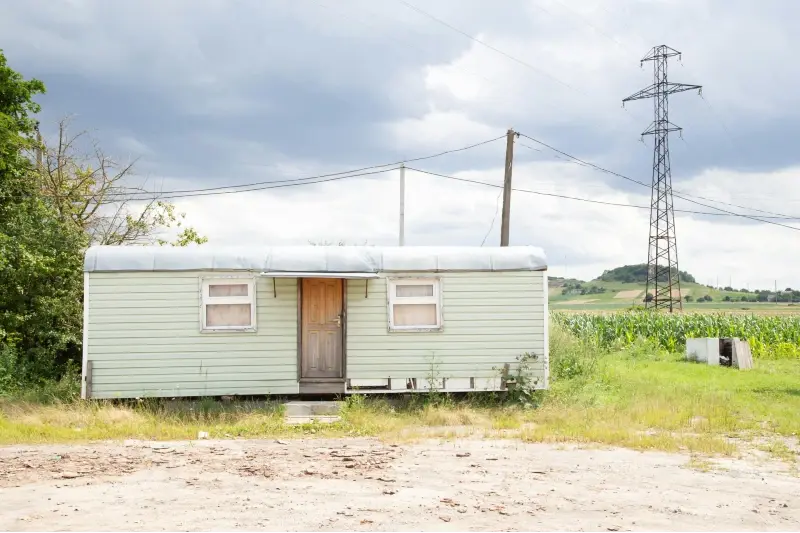
The term "mobile home" refers specifically to factory-built homes constructed before June 15, 1976, the date the U.S. Department of Housing and Urban Development (HUD) introduced the national Manufactured Home Construction and Safety Standards. These older units were built on steel chassis with wheels, designed to be towed from place to place, and were not held to the same safety or construction standards in use today.
While many people still use the term "mobile home" colloquially to describe any factory-built home, it is technically outdated and no longer accurate for homes built after 1976.
Homes constructed before the HUD code generally have lower resale values, limited financing options, and may face zoning restrictions in many municipalities. It's worth noting that while mobility was once a core feature, most mobile homes today remain permanently placed on rented lots in mobile home parks and are rarely moved after initial installation.
Conclusion
Choosing between modular vs manufactured homes depends on your financial goals, lifestyle needs, and long-term plans.
Modular construction typically offer greater financing flexibility, long-term stability, and potential for value retention. Manufactured homes provide a more affordable entry point, with lower upfront costs and faster access to housing.
Both options have evolved significantly, and each can be the right choice depending on your situation. Understanding the differences in construction standards, financing, and property classification is key to making a decision that aligns with your needs in today’s housing market. And Built America Magazine delivers industry insights and unbiased comparisons to help you navigate these decisions confidently.


Comments